
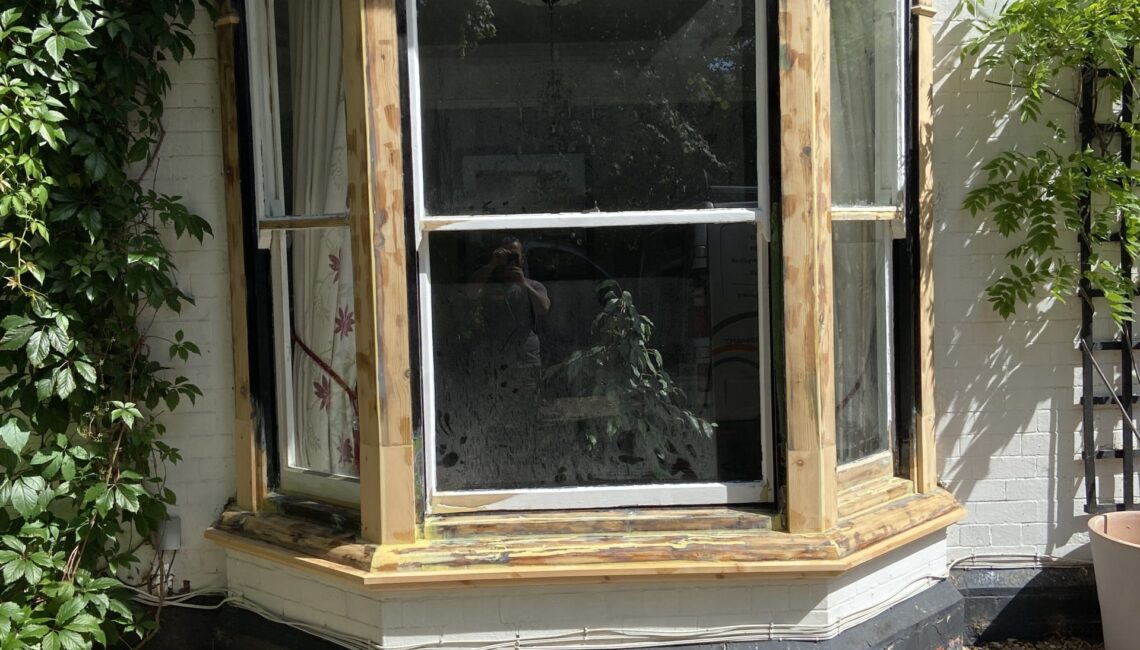
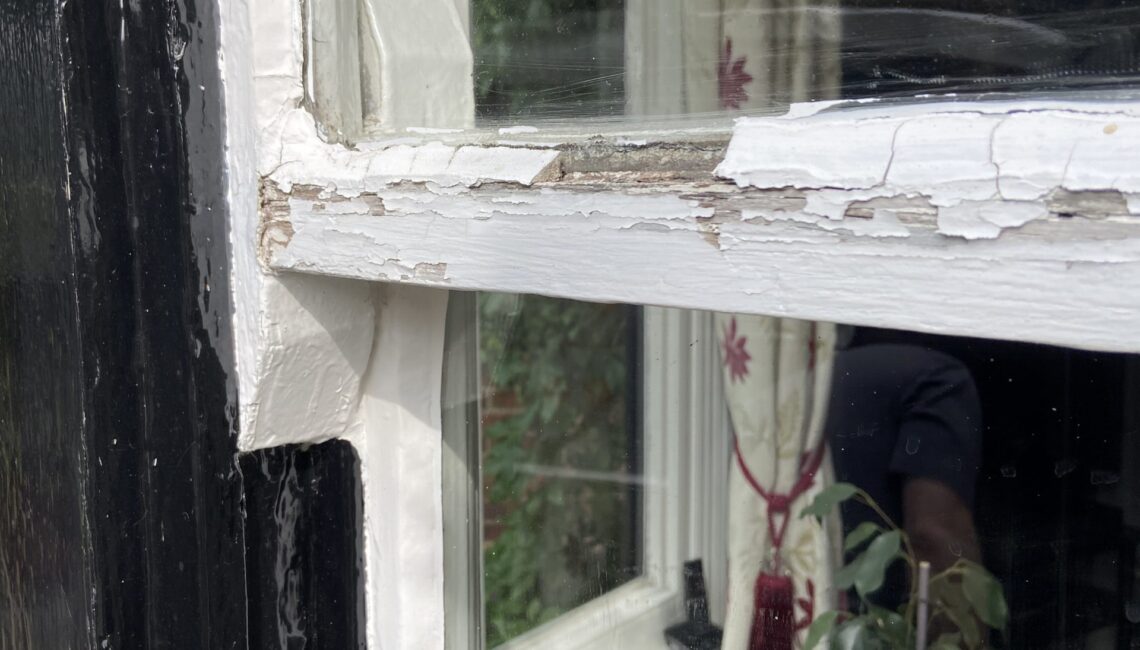
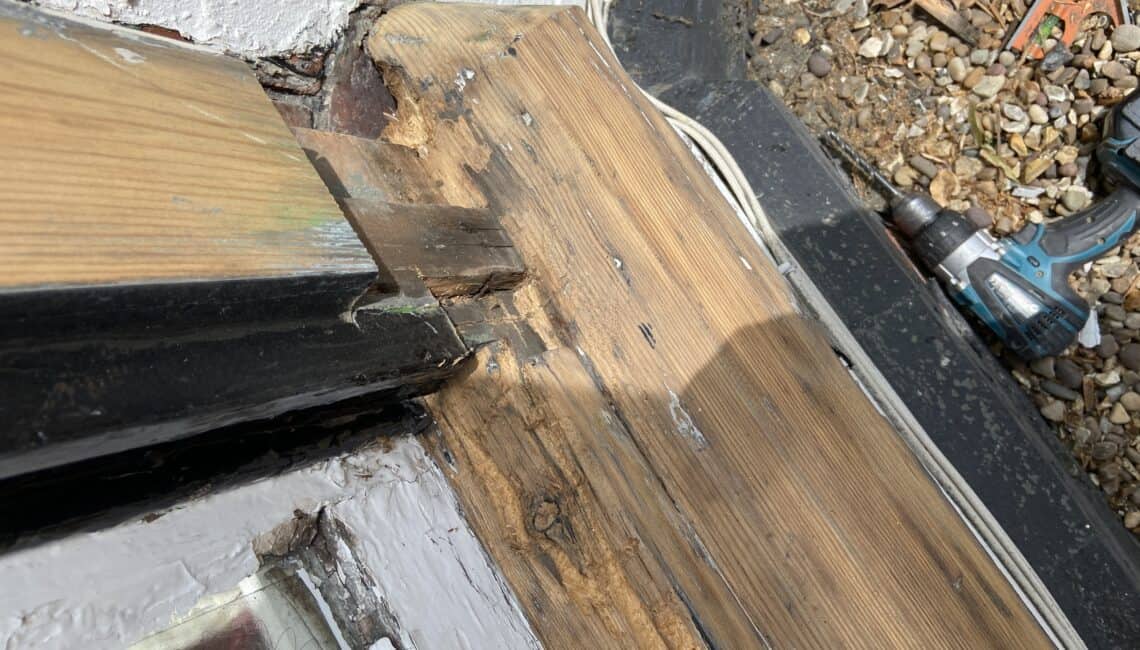
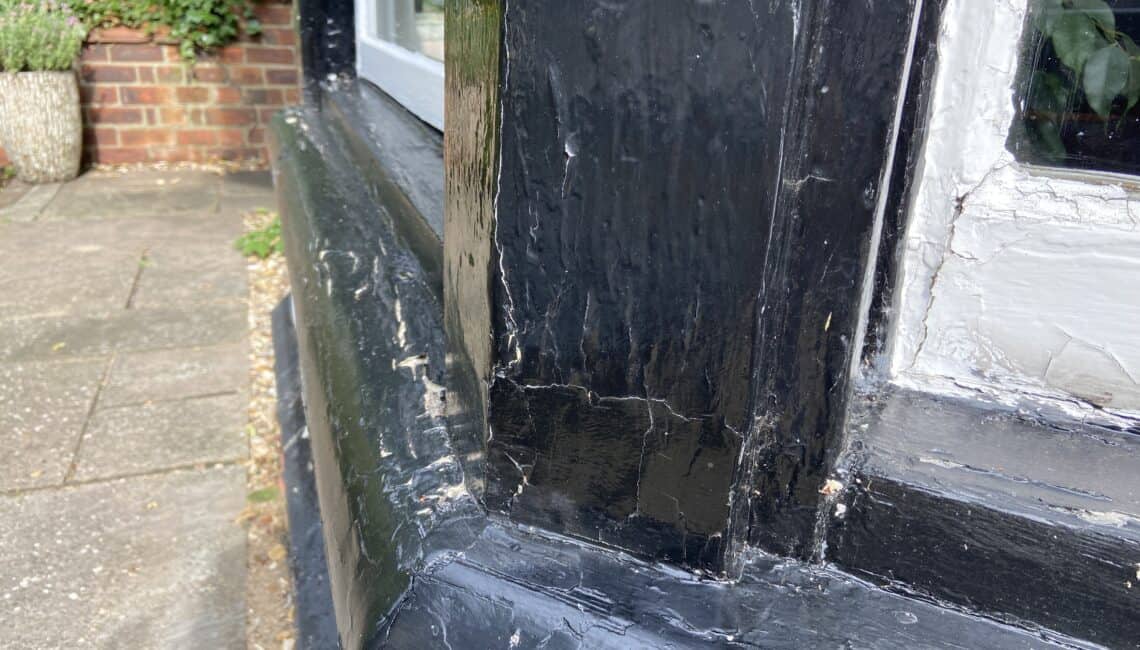
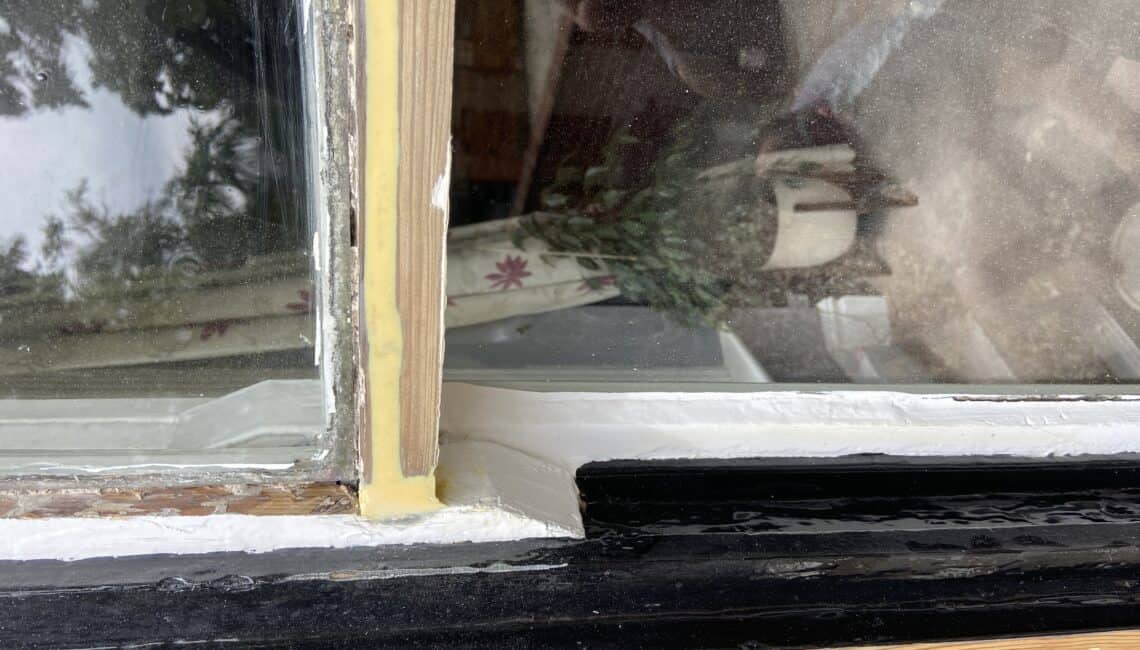
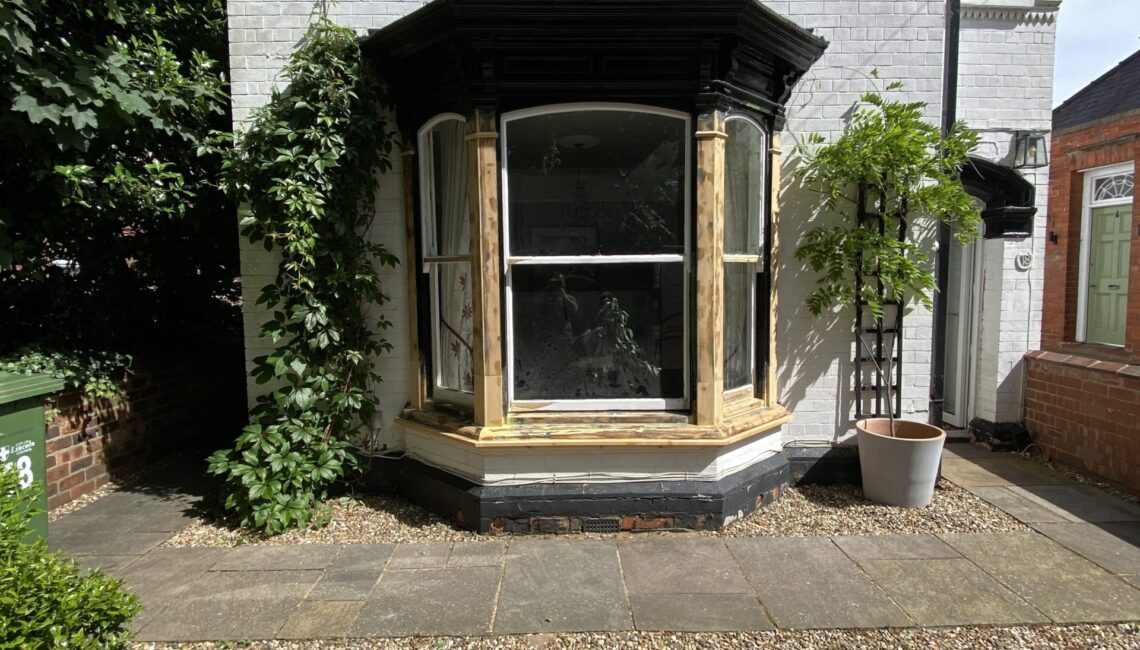
Radial Joinery carried out timber sash-window splicing and repair work on traditional vertical sliding sash windows at this property in Lincoln.
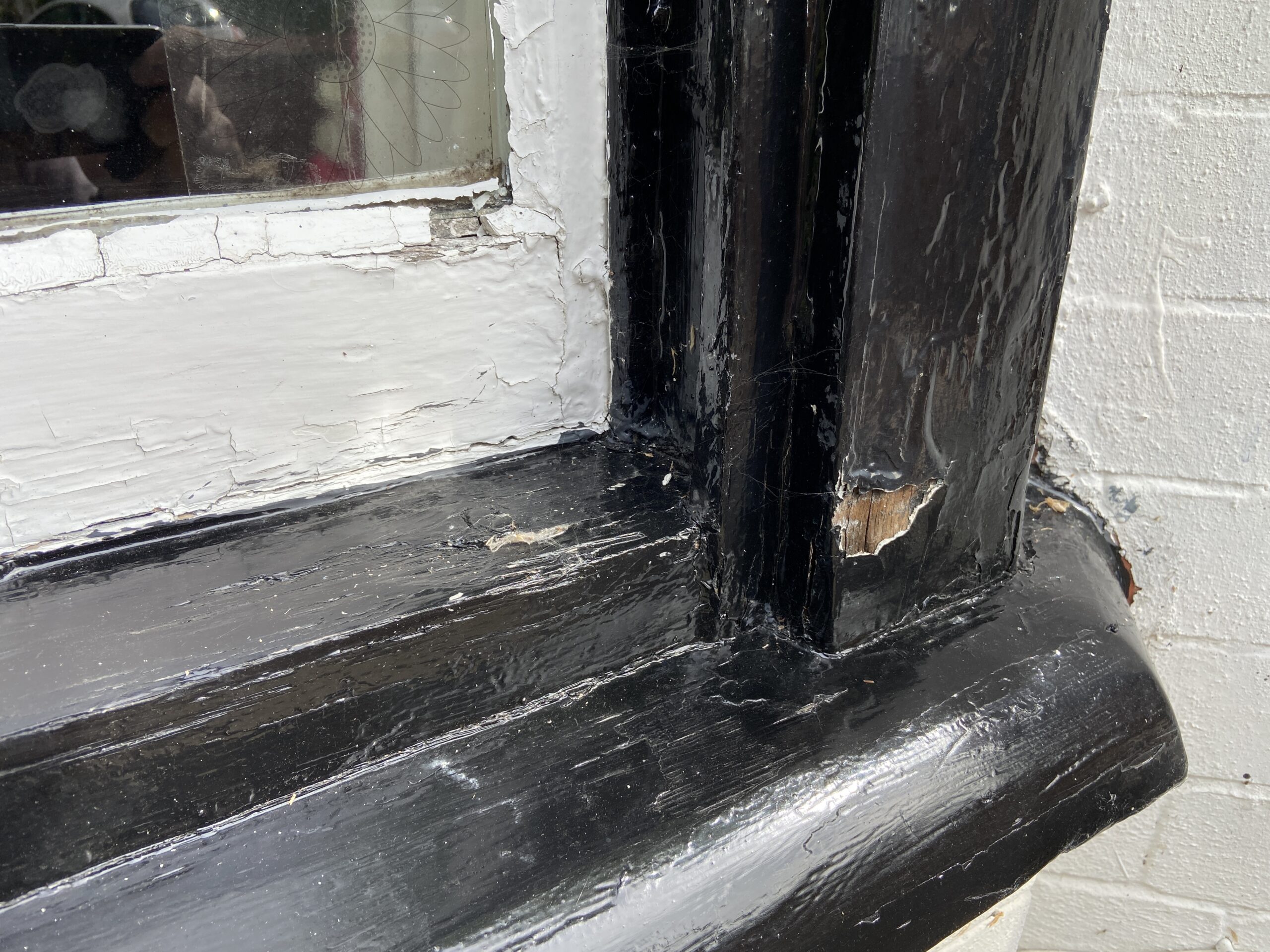
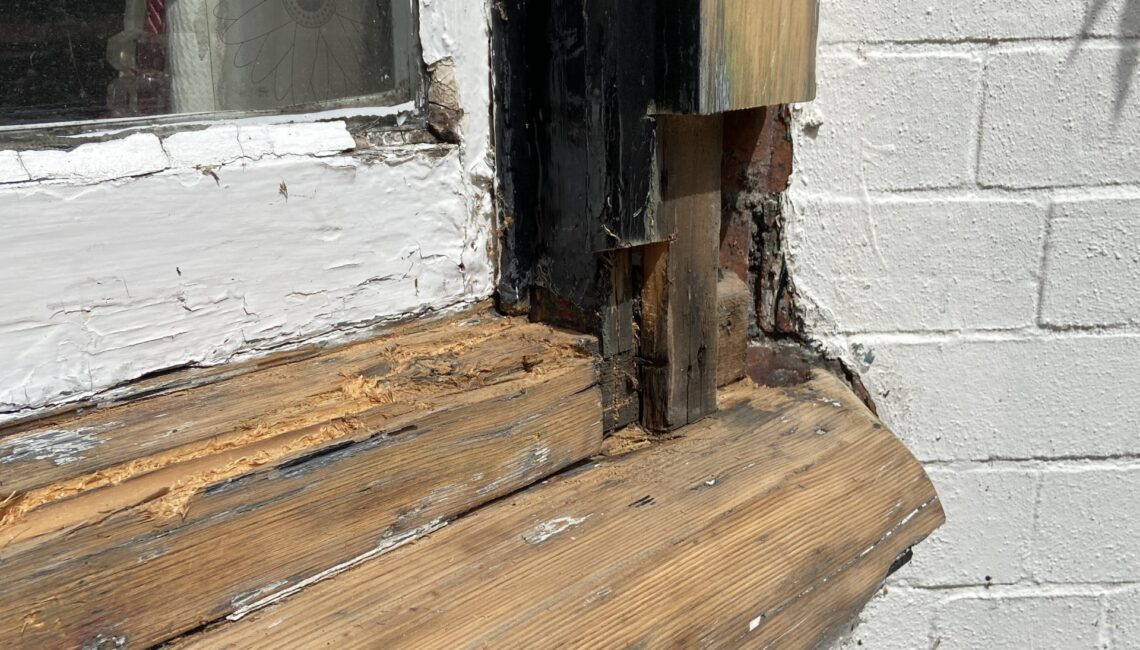
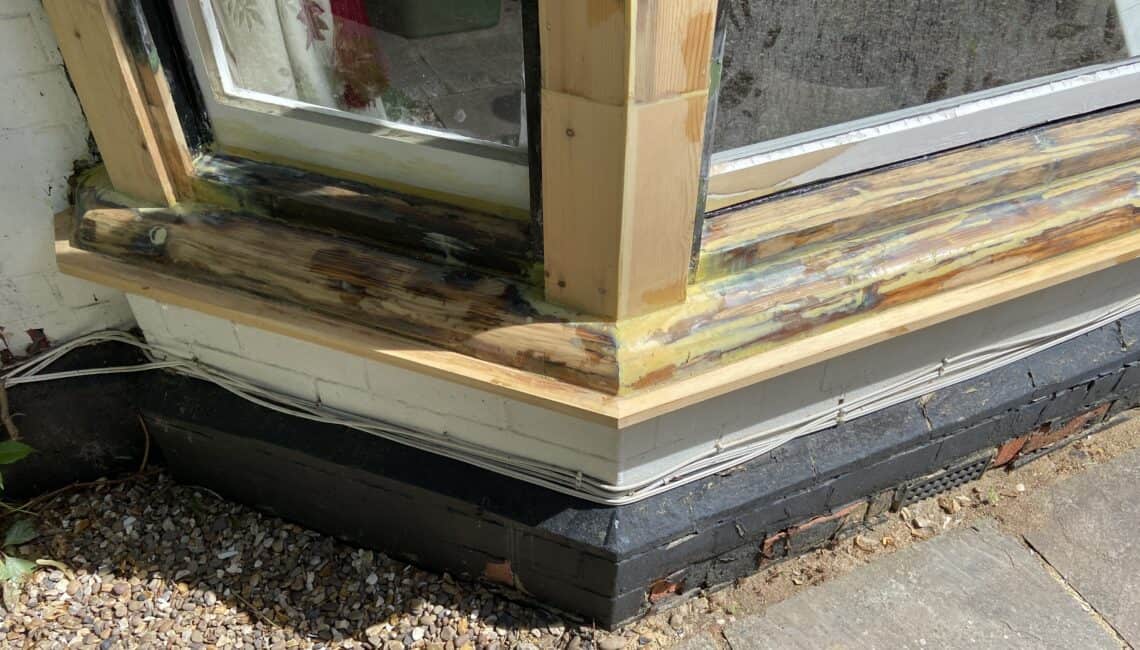
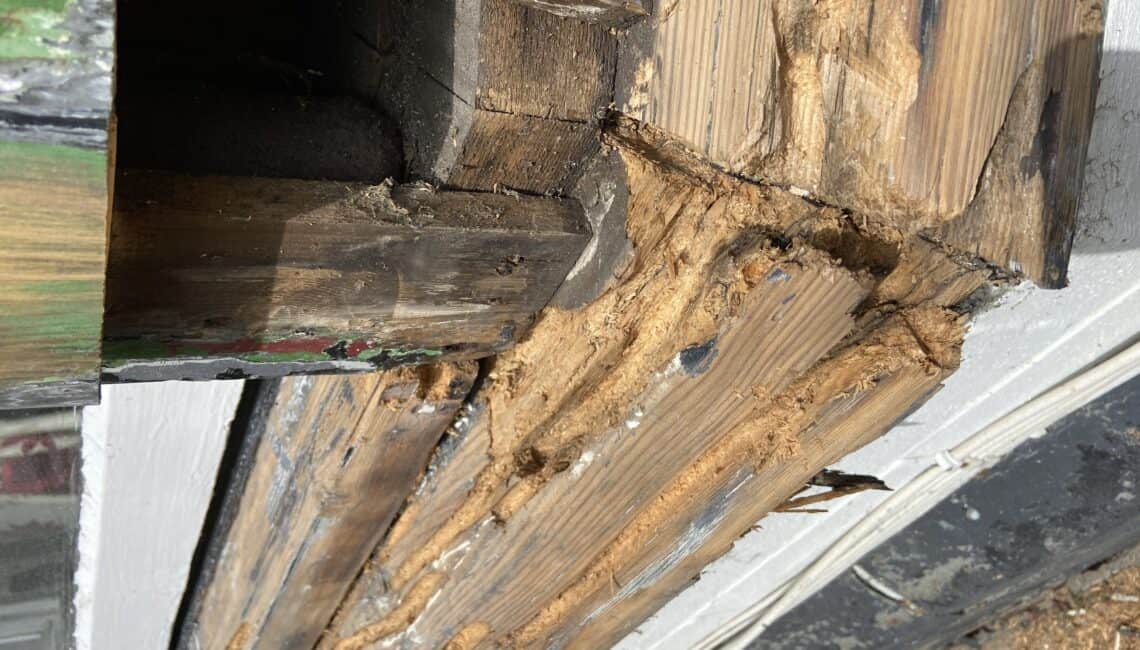
The project covered the front bay windows together with two rear vertical sliding sash windows. Areas of decay had developed beneath several layers of paint, particularly around exposed joints and vulnerable lower sections.
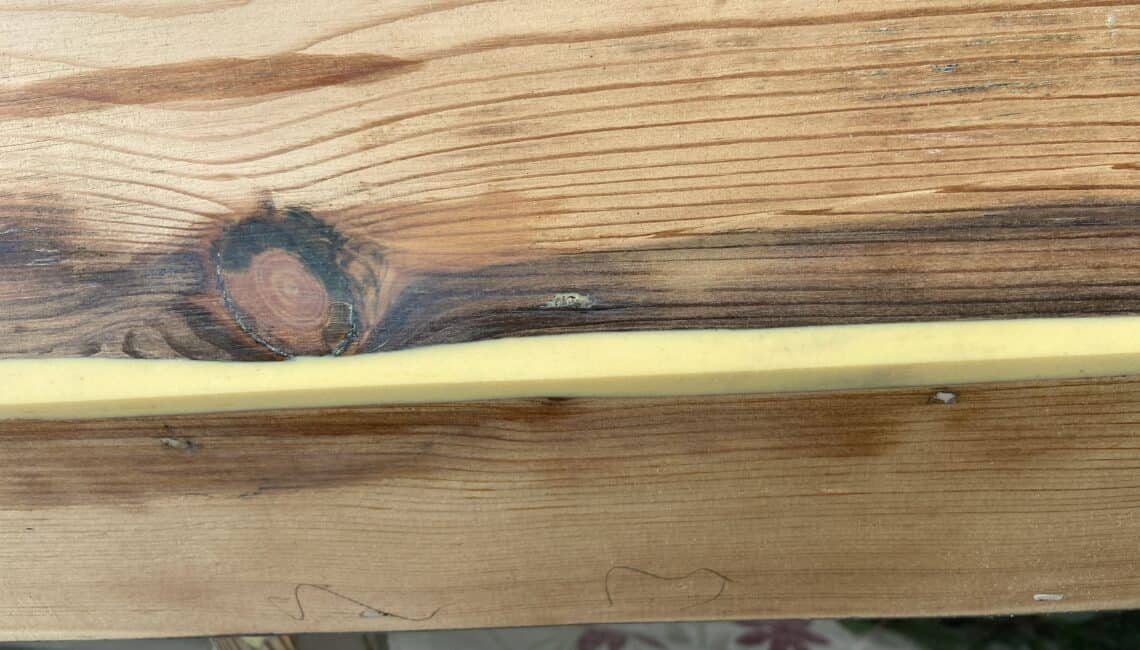
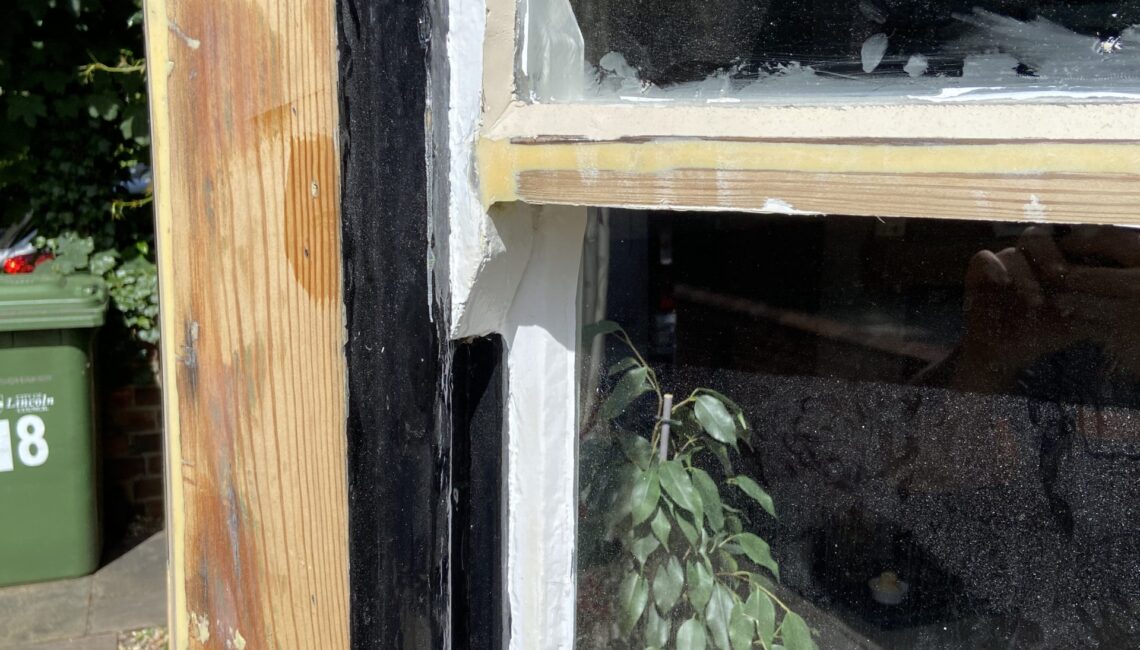
Much of the original timber remained sound, so complete window replacement was unnecessary. We removed the failed material and repaired the affected areas using purpose-made timber splice sections together with a specialist epoxy timber-repair system.
The completed windows were left structurally sound and ready for final preparation and decoration.
Timber Sash Window Repairs in Lincoln
Traditional timber sash windows can remain serviceable for many years when they are maintained and repaired correctly. However, failed paint coatings, open joints and trapped moisture can eventually allow decay to develop.
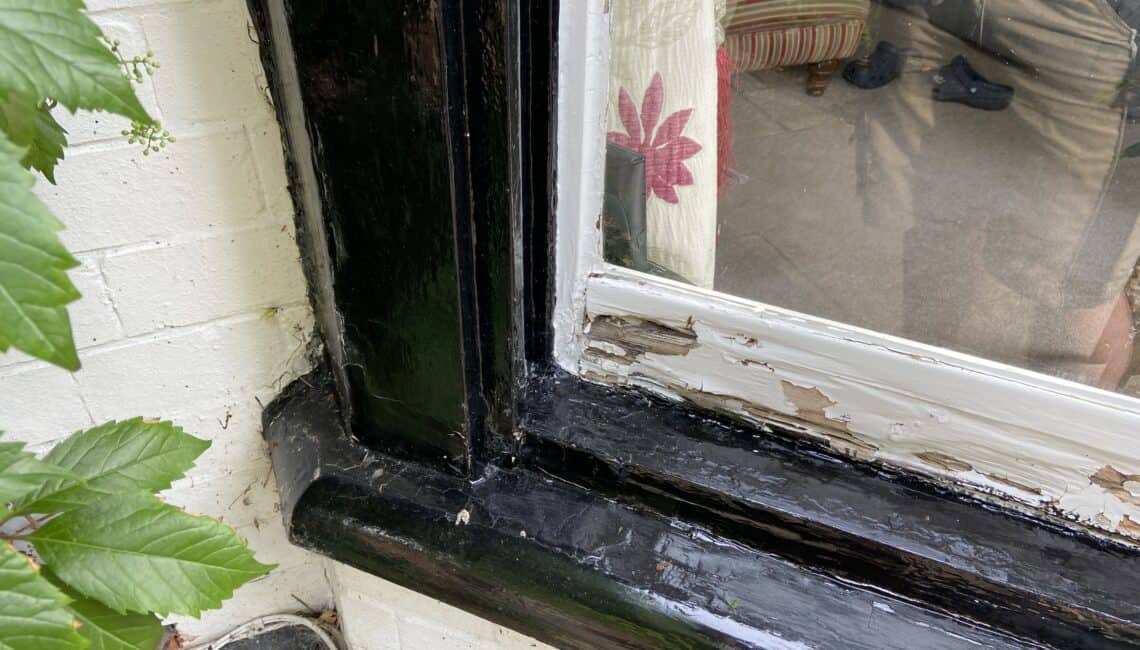
The visible surface does not always show the full condition of a window. Several layers of paint may conceal soft timber, failed joints or previous repairs that are no longer providing adequate protection.
On this project, the existing paint was removed from the affected sections so the condition of the timber could be assessed properly. This allowed each area to be considered individually and sound original timber to be retained wherever practical.
This work forms part of our timber joinery repair and restoration service for period homes, listed buildings and character properties.
Identifying Decay Beneath the Paint
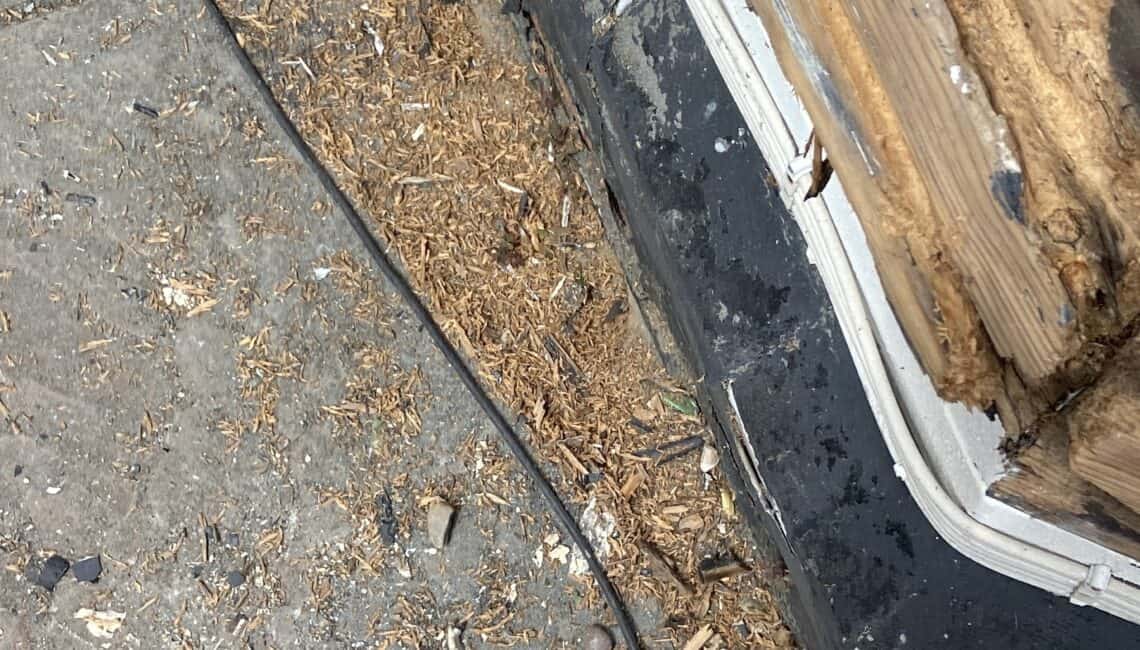
Timber decay commonly develops where moisture remains in contact with the wood for an extended period. Window sills, lower frame sections, joints, glazing details and exposed end grain can be particularly vulnerable if the protective coating starts to fail.
Repeatedly applying new paint without dealing with open joints or damaged timber can sometimes trap moisture beneath the coating. Deterioration may then continue even though the window appears reasonably sound from the outside.
During this project, loose paint and failed material were removed carefully. The damaged sections were then cut back until sound timber was reached.
This provided a reliable base for the new timber sections and epoxy repairs.
Purpose-Made Timber Splice Repairs
Timber splicing involves removing a damaged section and replacing it with a new piece of timber made to fit the existing window.
The replacement section must follow the dimensions, shape and moulded profile of the surrounding joinery. This is particularly important on sash windows because the repaired components must continue to fit together and operate correctly.
The repair process can include:
- Removing paint and loose material around the damaged area
- Cutting back decayed timber until sound material is reached
- Recording the shape and profile of the original component
- Manufacturing a purpose-made timber splice section
- Jointing the new section into the existing window
- Shaping and sanding the repair to match the surrounding joinery
- Preparing the completed area for final decoration
Splicing allows the failed part of a sill, frame or sash to be replaced without removing sound original material unnecessarily.
Epoxy Repairs for Smaller Defects
Not every damaged area requires a complete timber splice. Smaller defects, damaged edges and irregular areas can sometimes be rebuilt using a specialist epoxy timber-repair system.
The failed timber still needs to be removed and the remaining material prepared correctly. The repair material can then be formed and shaped to reproduce the original edge, joint or moulding.
Once cured, the repaired area is sanded to follow the surrounding timber and prepared for painting.
Using timber splices and epoxy repairs together allows the repair method to be selected according to the size, position and condition of each affected area.
Replacement Glazing Beads and Window Components
We also allowed for replacement glazing beads where existing sections were damaged or unsuitable for reuse.
Smaller window components still need to match the profiles and proportions of the surrounding joinery. Purpose-made beads and repair sections help the completed work sit naturally within the original window.
Every affected component was considered once the paint and failed material had been removed and the true condition of the window was visible.
Retaining the Original Sash Windows
The purpose of this project was to retain the existing sash windows rather than replace them unnecessarily.
Original windows contribute to the appearance and character of a property through their proportions, glazing arrangements, mouldings and traditional construction. Keeping sound original material can therefore be preferable when a reliable repair is possible.
Repairing the localised areas of decay allowed the main window structures to remain in place while the damaged sections were made sound.
For listed buildings and properties with important traditional details, our wider heritage and period property joinery service covers repairs, restoration and purpose-made replacement joinery.
When Can a Timber Sash Window Be Repaired?
The suitability of a repair depends on the overall condition of the window rather than the appearance of only one damaged section.
Repair may be appropriate where:
- Most of the existing frame or sash remains sound
- Decay is limited to particular joints or sections
- The damaged timber can be removed completely
- A reliable splice can be connected to sound material
- The original profiles and proportions can be retained
- The repaired window can continue to operate correctly
Complete replacement may be more suitable where decay is widespread, essential structural components have failed or previous repairs no longer provide a reliable base.
Where replacement is necessary, Radial Joinery can manufacture traditional sliding sash and casement windows through our bespoke timber window service.
Preparing the Repaired Windows for Decoration
After the timber-splice and epoxy work was completed, the repaired sections were shaped, sanded and prepared for final finishing.
A suitable external coating system is important because it protects the timber from moisture and weathering. Paint should cover the repaired sections, joints and surrounding timber consistently.
Regular inspection is also worthwhile. Small cracks, open joints and damaged coatings are easier to address before water reaches the timber and causes more extensive deterioration.
Keeping the paintwork in good condition can greatly extend the service life of both the original window and the repaired sections.
Repair Rather Than Unnecessary Replacement
Localised decay does not automatically mean that a traditional window has reached the end of its useful life.
A careful repair can retain the appearance, proportions and construction of the existing sash window while replacing the timber that has genuinely failed.
This approach can be particularly valuable on period properties where standard replacement windows may not reproduce the original mouldings, glazing bars or frame sections accurately.
Every window should be assessed individually because deterioration can vary considerably between different elevations and even between different sections of the same window.
Timber Window Repairs Across Lincolnshire
Radial Joinery is a bespoke joinery manufacturer based in Lincoln. We undertake suitable sash-window repairs, timber splicing and restoration work for properties across Lincoln and the surrounding Lincolnshire villages.
For an initial assessment, please provide photographs showing the complete windows as well as close-up images of the damaged sections. Approximate measurements and the full property address will also help us understand the scale and location of the work.
Some damage may only become visible after loose coatings and decayed timber have been removed. We will discuss any additional work if the deterioration is more extensive than could reasonably be identified beforehand.
Related Sash Window Projects
- Listed-building sash-window repairs in Lincoln
- Heritage sash-window replacement in Carlton-le-Moorland
- Replacement timber sash windows near Market Rasen
- Accoya windows and doors for a listed property near Lincoln
You can also view more completed Radial Joinery projects.
Discuss Your Timber Sash Window Repairs
If your timber sash windows have areas of decay, failed joints or damaged sills, please send us photographs, approximate measurements and the full property address.
Call 01522 801760, message us on WhatsApp at 07368 659085, or use our project enquiry form.